Dining Table Decor: How to Style a Table for Everyday and for Guests
The dining table is one of the most looked-at surfaces in a home and often the least styled. It sits bare between meals, or it becomes a landing strip for mail and keys. Good dining table decor is not about buying a lot of things. It’s about a few pieces arranged with intent, plus the handful of rules that separate a table that looks styled from one that looks cluttered. This guide covers an easy everyday look you never have to reset, how to build a fuller tablescape when people come over, and the practical numbers, centerpiece height, runner length, and place settings, that quietly make the difference.
Start With an Everyday Table You Never Have to Reset
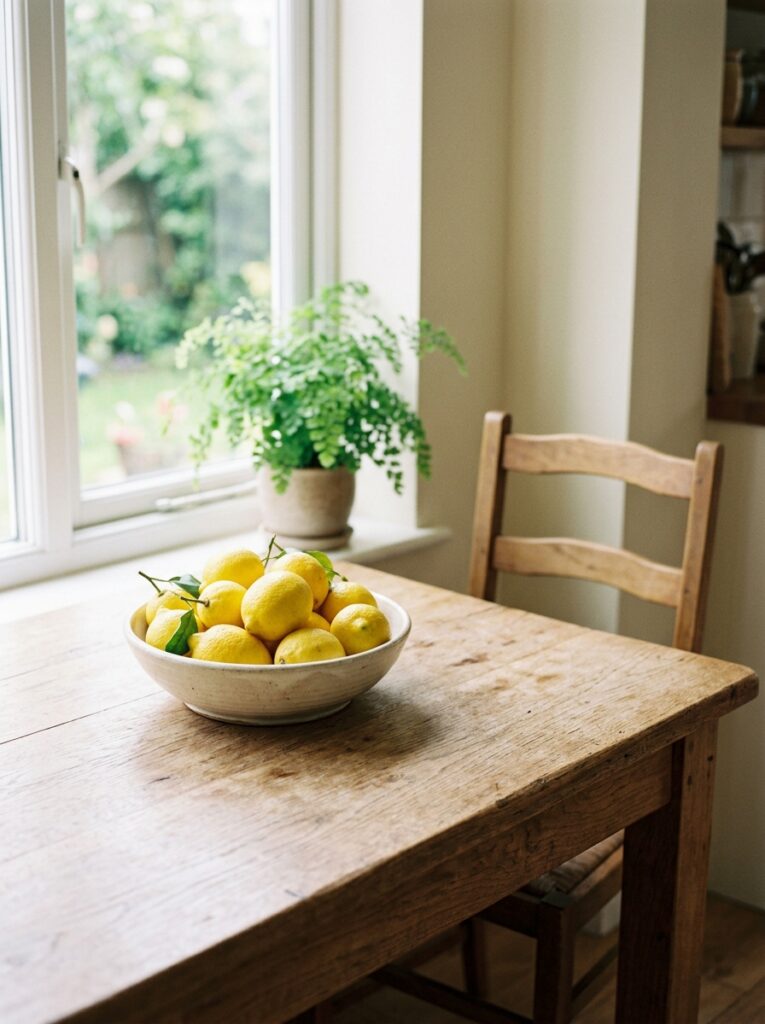
The most useful decor is the kind that lives on the table permanently and takes two seconds to move when it’s time to eat. Aim for a simple, always-on arrangement so the table’s default state already looks deliberate.
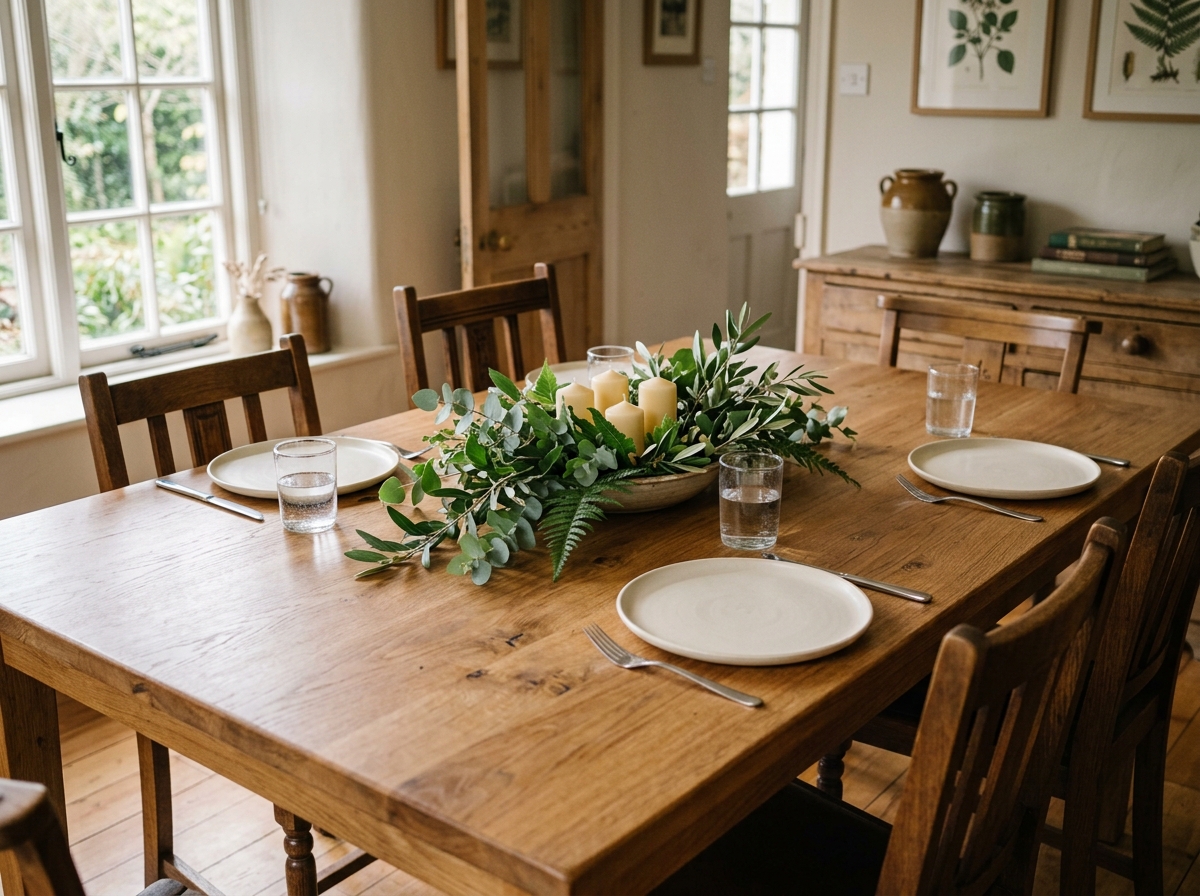
A low vessel in the center does most of the work: a shallow bowl, a wooden tray, or a short vase holding something seasonal, a few pieces of citrus, a stem or two of eucalyptus, some branches. A pair of candlesticks reads intentional on their own. Set any of this on a runner or a couple of placemats and the bare-table problem is solved with zero daily effort. A tray is especially handy because it corrals small loose objects into one tidy group instead of letting them scatter. Keep whatever you choose low and confined to the center third of the table, and you can slide it aside in a moment when the plates come out.
Build the Tablescape in Layers
When you’re setting the table for guests, it helps to think from the surface up, one layer at a time. Each layer has its own job, and getting the proportions right on each is what makes the whole thing look composed.
The base layer
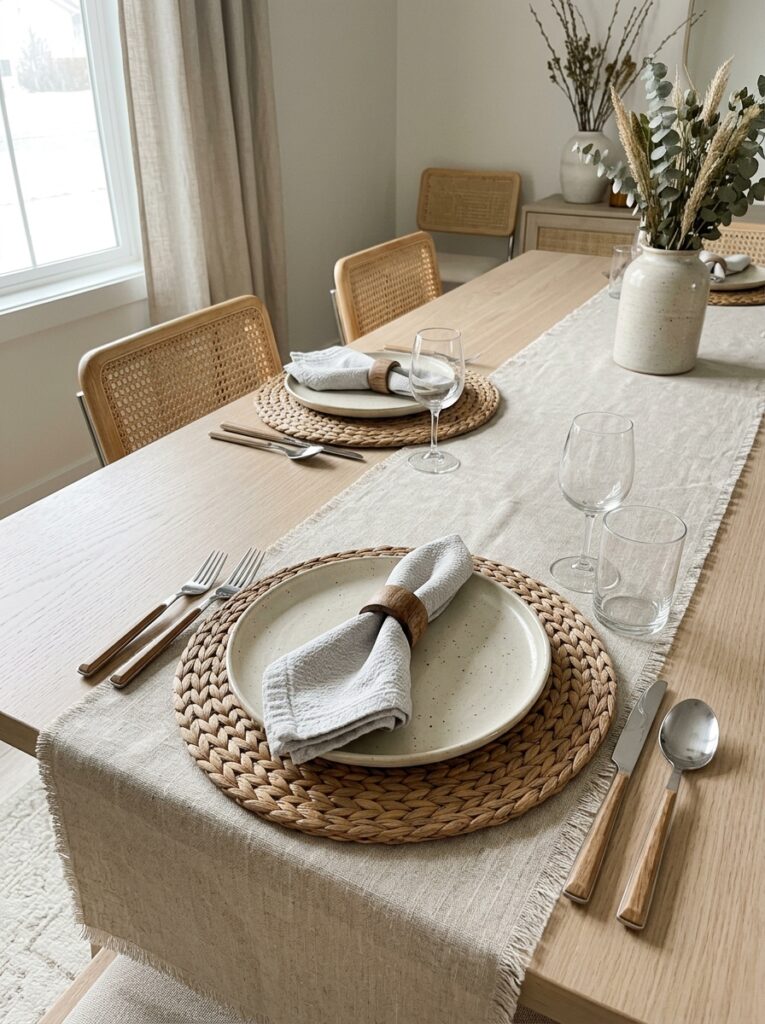
This is whatever covers the table. A tablecloth reads formal and protects the surface; a runner gives a lighter, more casual line down the center; placemats define each person’s space; and a beautiful wood table can simply go bare. You can combine them, a runner with placemats is a common pairing.
If you use a runner, size it properly: it should hang about 6 to 12 inches past each end of the table, roughly 6 inches for a casual look and 10 to 12 for a formal one, and run somewhere between one-third and one-half of the table’s width while staying at least 6 inches narrower than the table, according to All Cotton and Linen. The simple formula is your table’s length plus twice the drop you want. A runner that ends flush with the tabletop can look stranded, and one that puddles toward the floor gets in the way of chairs.
The centerpiece
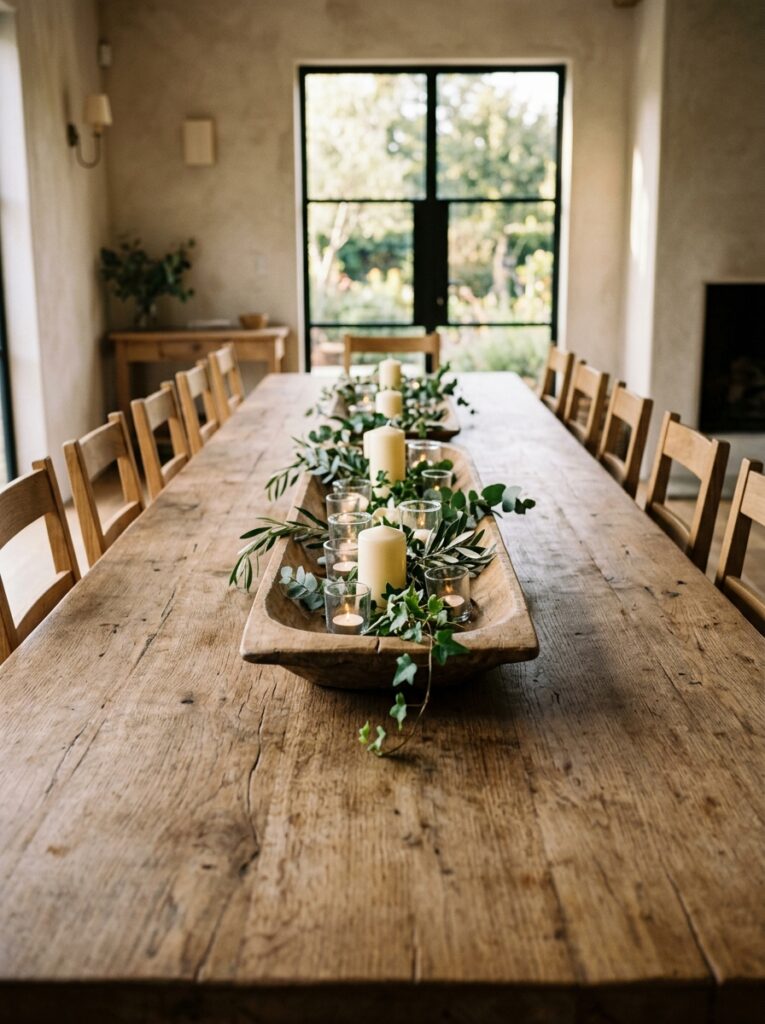
This is the anchor, and it’s where most people slip up, on height. The single rule worth memorizing: keep a centerpiece either under about 12 inches tall or above about 24 inches. Anything in the 12-to-24-inch band lands right at seated eye level and blocks the very conversation the table exists for, as Flowyline explains.
If you do want height, use a slim base like a tall candelabra or a narrow vase that people can see under and around. Scale matters too: a centerpiece should take up roughly one-third of the table’s width, which works out to about 20 inches on a 60-inch table. Group elements in odd numbers and vary their heights so the arrangement looks collected rather than lined up, a point Our Everyday Life makes about keeping displays from looking monotonous. For a long table, a low linear run, a dough bowl of candles and greenery, or several small clusters tied together by the runner, fills the space better than one oversized object stranded in the middle.
The place settings
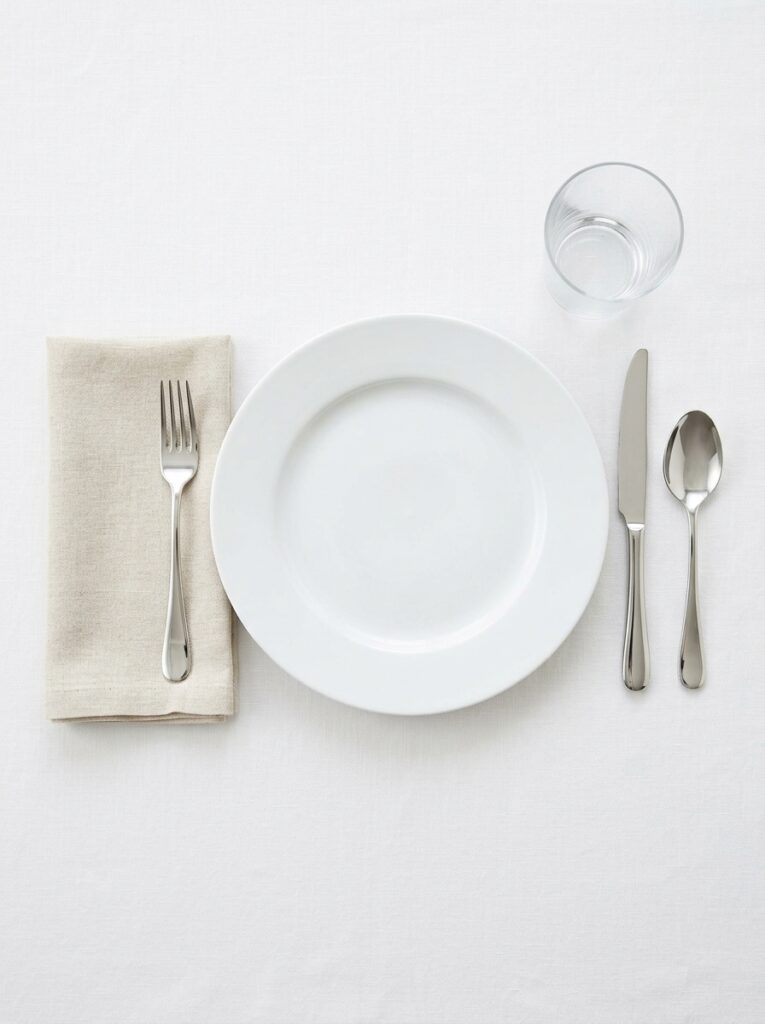
Each person’s spot follows a simple logic, and consistency across the settings is what makes even a casual table feel pulled together. The Emily Post Institute lays out the basics: forks to the left of the plate, knives and spoons to the right, the knife blade facing in toward the plate, the water glass above the knife, and the napkin either to the left of the forks or on the plate. Utensils are used from the outside in, so they’re placed in that order. Two memory tricks make it foolproof. Spell “FORKS” from left to right, where F is the fork, O is the plate, K is the knife, and S is the spoon. And touch each thumb to its forefinger to make a lowercase “b” with your left hand and a “d” with your right, a reminder that bread sits on the left and drinks on the right.
The light and the finishing touches
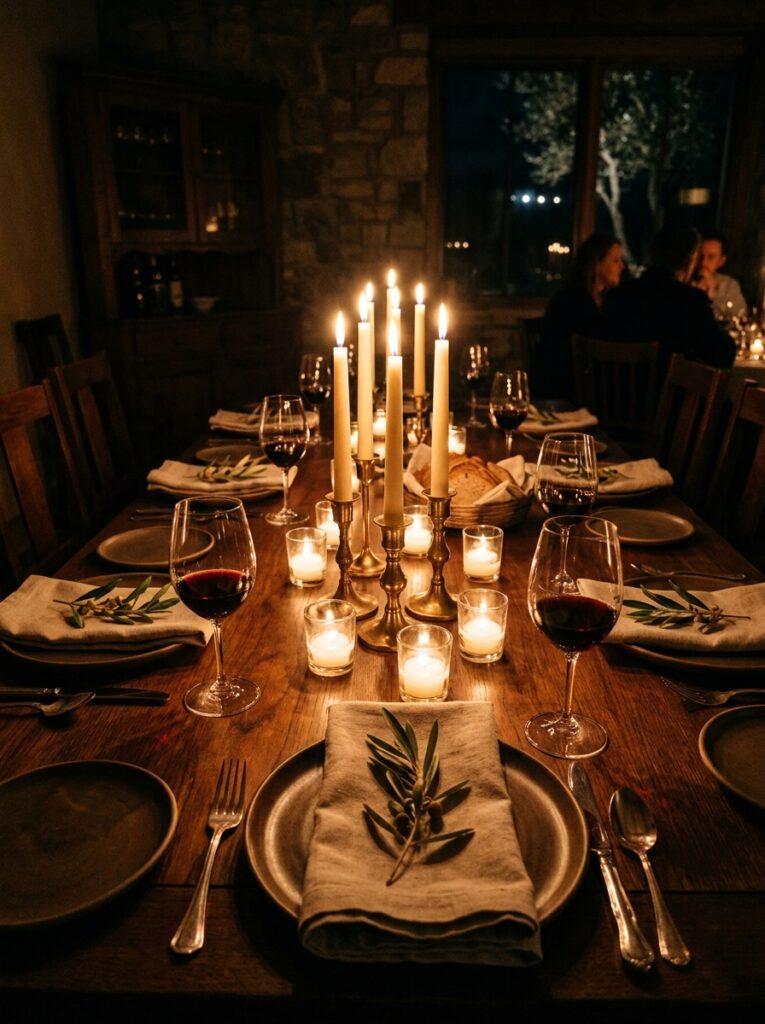
Candles carry most of the mood. A loose cluster of tapers or a scatter of votives softens the whole table, and it’s worth choosing unscented ones at the dining table so the fragrance doesn’t compete with the food. If a pendant or chandelier hangs above, position the bottom of it about 30 to 36 inches above the tabletop, high enough to keep sightlines and the centerpiece clear while still anchoring the table, as Golden Lighting advises. From there, small personal touches do a lot: a sprig laid on each napkin, a place card, a folded menu.
Style It to the Occasion
The layers stay the same from one occasion to the next. You’re really just turning a dial.
For everyday, a runner or placemats with one low vessel is plenty. Casual dinner with friends, add candles, cloth napkins, and a low seasonal centerpiece. For a formal or holiday meal, bring in a tablecloth, full place settings, a taller or more elaborate centerpiece on a slim base, and more candlelight. The easiest way to handle the seasons is to change what goes in the vessel rather than buying an entirely new set, citrus and evergreen in winter, wildflowers in summer, gourds or dried stems in autumn. The structure never changes; only the contents do.
Choose a Palette and Let Texture Do the Rest
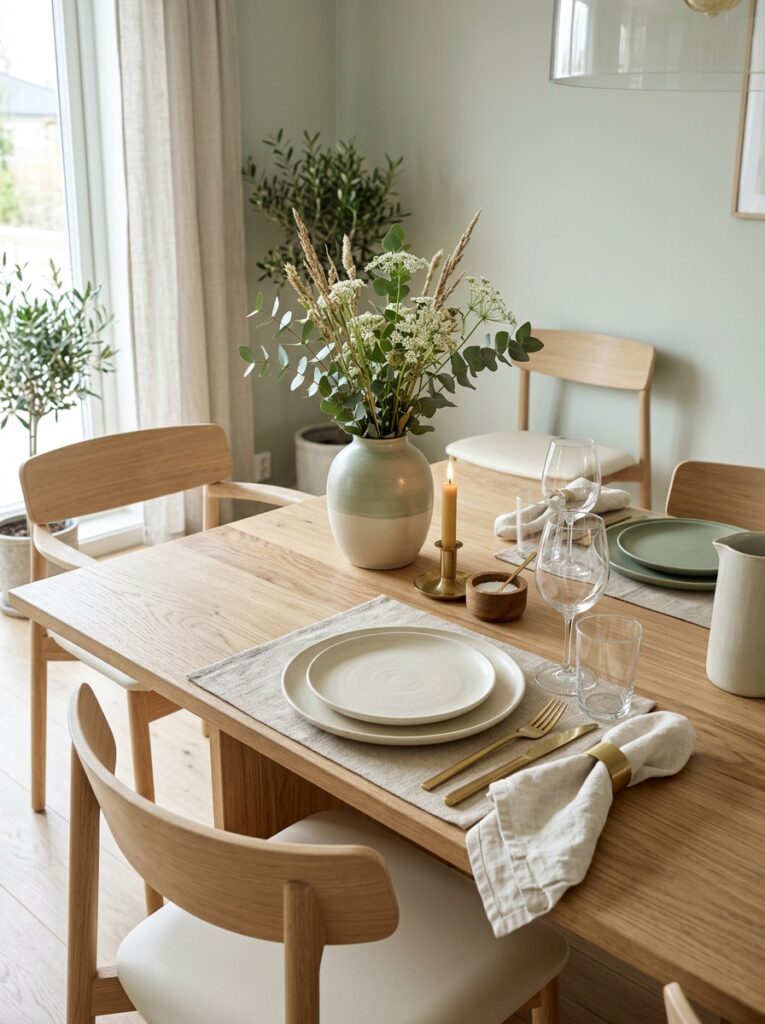
Cohesion on a table comes from restraint, not from matching. Pick two or three colors and repeat them across the linens, the flowers, and the candles, and the table will read as one considered look. You do not need everything to match, though. Mixing textures actually looks more collected than a matched set: linen against wood, ceramic beside glass, a little metal for shine. Natural materials in particular feel warm and current. The most common misstep here is styling straight from a boxed set where every piece coordinates too perfectly. Swapping even one element for something with a different texture breaks that catalog look and makes the whole table feel gathered over time.
Common Dining Table Decor Mistakes
A centerpiece at eye-level height. It blocks conversation, so keep it under 12 inches or above 24.
A centerpiece too big for the table. It crowds the plates, so hold it to about one-third of the table’s width.
Scented candles at the table. They fight the aromas of the food, so save them for other rooms and use unscented ones here.
No room left for the actual meal. Keep decor to the center line and choose a low or linear centerpiece for family-style dinners so the serving dishes have somewhere to go.
Everything matched from a single set. Repeat a palette instead, and mix in different textures.
A runner or cloth that’s the wrong size. A stranded runner or one that puddles both look like afterthoughts, so aim for that 6-to-12-inch overhang.
A Five-Minute Everyday Version and a Thirty-Minute Guest Version
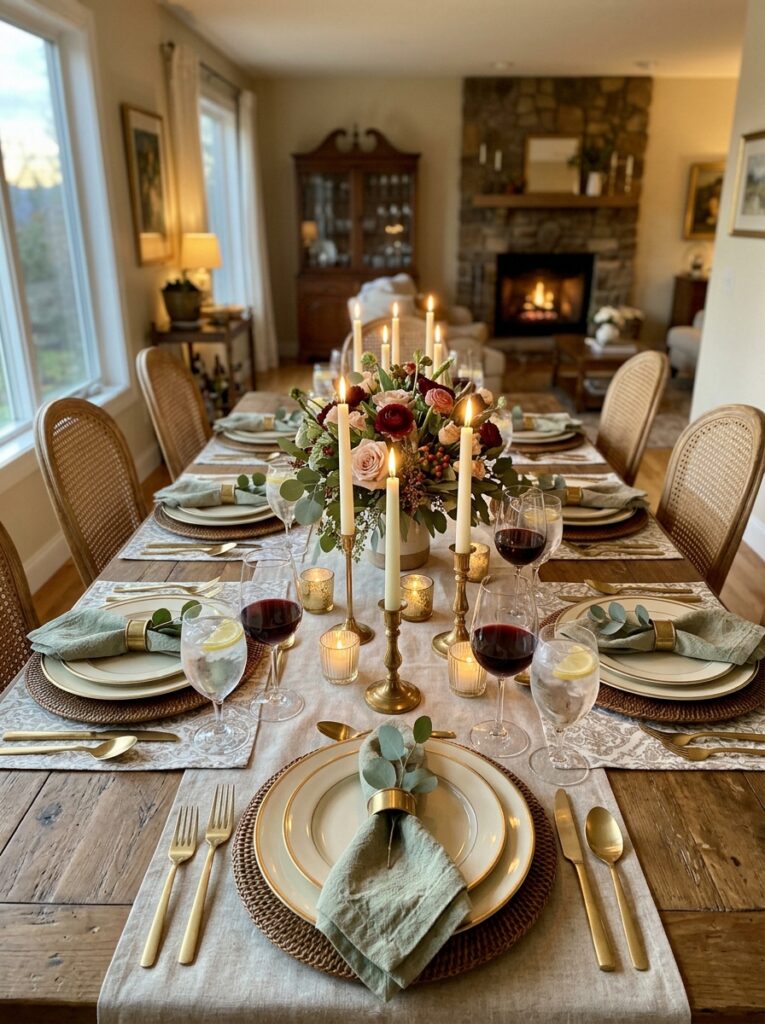 For the everyday table, run a runner down the center, set a bowl of fruit or a short vase of greenery in the middle, and you’re done. It takes about five minutes and holds up day to day.
For guests, give yourself half an hour. Lay placemats and set each place using the FORKS order, position a low centerpiece with a few candles flanking it, fold the napkins, and light the candles just before everyone sits down. Worked in these layers, dining table decor stops feeling like a production and turns into a short, repeatable routine, one that makes an ordinary table look intentional and a special one feel like an occasion.